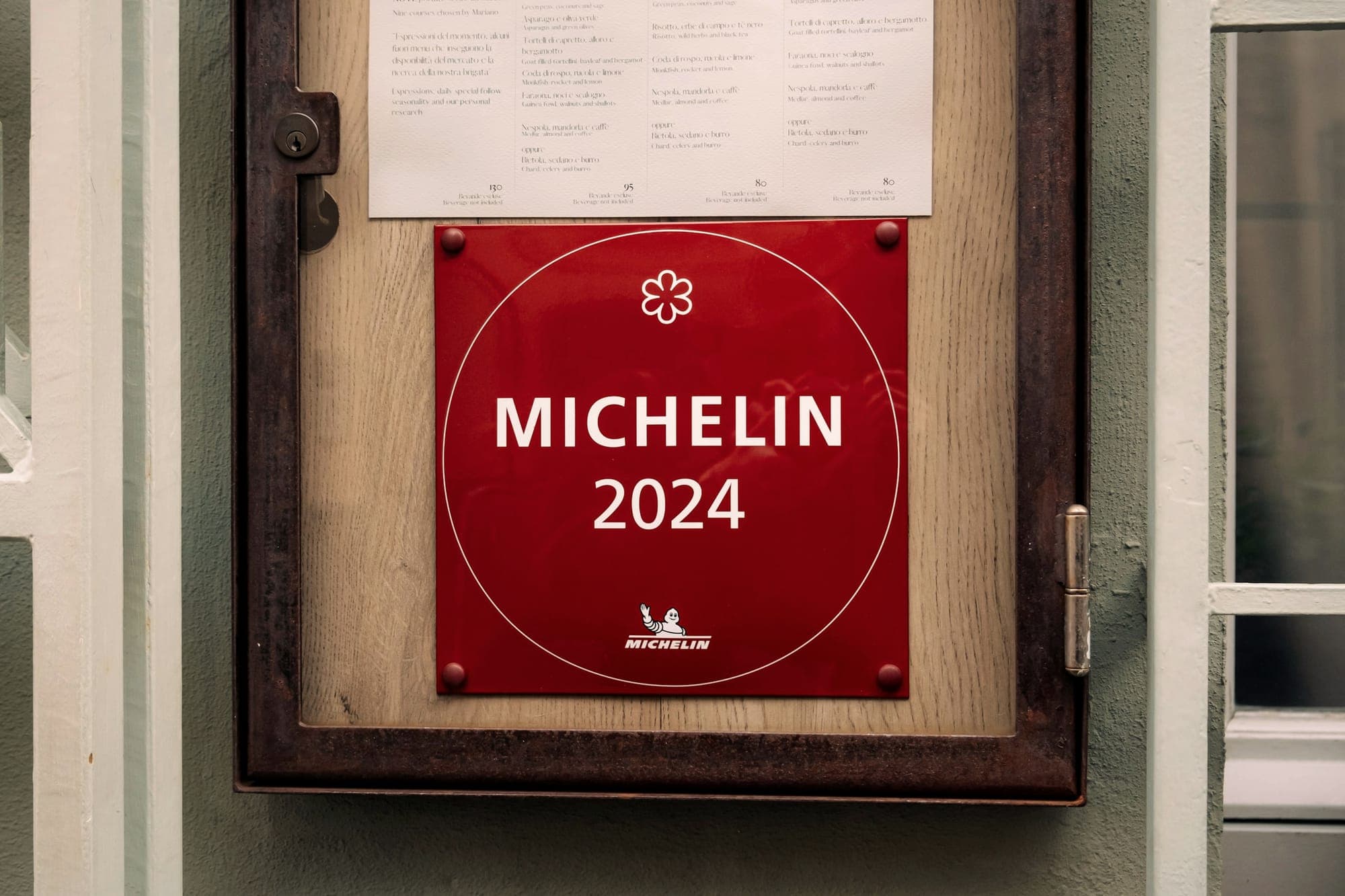
AI rarely cites an award. Two in five are Michelin
In 16,022 passages where ChatGPT or Gemini recommend a business, 191 cite a prize or a guide: 1.2%. Michelin is 76 of them. For plumbers, almost none.
1.2%
of the 16,022 passages recommending a business cite a prize, a guide or a ranking (191)
In this article
Short answer: when AI recommends a business, it cites an award in 1.2% of cases, and two times in five it is a Michelin star. In 16,022 passages where ChatGPT or Gemini recommend a business in four countries, 191 give a prize, a guide or a ranking as a reason. The Michelin Guide alone accounts for 76. For restaurants, a distinction comes up in one passage in six; for plumbers, electricians, locksmiths, garages and driving schools, in 6 passages out of 4,809. AI does not reward awards: it repeats the ones from a judge it already knows.
2 in 5
of those distinctions are Michelin stars (76 of 191)
6 of 4,809
passages about plumbers, electricians, locksmiths, garages and driving schools cite one
An award travels into an AI answer when it comes from a judge the model already knows.
What was measured
The corpus of the 1 and 2 October editions, cut the same way: our four studies (United States, United Kingdom, France, Brazil), buyer questions put to ChatGPT (gpt-4o-mini) and Gemini through their programming interfaces, without web search - 3,600 answers, and within them 16,022 passages each devoted to a named business. In every passage we looked for a distinction: a prize or award (“award-winning”, “primée”, “premiado”), a guide (Michelin, Gault&Millau), a title (Meilleur Ouvrier de France), a ranking (Chambers, Legal 500), a readers' vote (“Best of”). The detector was proven on 15 positive and 10 negative cases, then corrected three times on rereading: the French “se distingue par” (stands out for) is not a distinction, “the best of both worlds” is not either, and a piece of advice (“look for attorneys who have received awards”) says nothing about a business.
A prize comes up for restaurants, almost never for tradespeople
| Trades | Passages | With a distinction | Share |
|---|---|---|---|
| Restaurants, hotels, bakeries | 1,898 | 111 | 5.8% |
| Lawyers, accountants, insurance, marketing, recruitment | 4,959 | 44 | 0.9% |
| Hair, beauty, photographers, dentists | 3,185 | 25 | 0.8% |
| Estate agents | 1,171 | 5 | 0.4% |
| Plumbers, electricians, locksmiths, heating, garages, driving schools | 4,809 | 6 | 0.1% |
| Total | 16,022 | 191 | 1.2% |
Restaurants carry most of it: 74 of their 452 passages cite a distinction, one in six, from 22.5% in the United Kingdom to 11.1% in Brazil. Next come French bakeries (8 passages out of 102, Meilleurs Ouvriers de France among them) and hotels. In the trades that come to your home, a distinction barely exists in the answers. Gemini cites them 4.4 times as often as ChatGPT: in 2.3% of its passages against 0.5%.
Two in five come from a single guide
| Distinction | Passages |
|---|---|
| The Michelin Guide (stars, Bib Gourmand) | 76 |
| Other awards and prizes (“award-winning”, James Beard, industry awards) | 71 |
| “Premiado” in Brazil | 26 |
| “Best of” lists and readers' votes | 8 |
| Meilleur Ouvrier de France | 5 |
| Legal rankings (Chambers, Legal 500, Best Lawyers) | 3 |
| Bread and pastry competitions | 2 |
| Total | 191 |
Michelin accounts for 76 of the 191 mentions: two in five. The other awards (71) mix named prizes - a chef described as a “James Beard Award winner”, a “Forbes Five-Star” hotel - with a bare “award-winning”, for agencies or hair salons for instance. “Best of” lists and readers' votes, which so many directories sell, appear in 8 passages out of 16,022.
What it means if you are the business
A distinction enters an AI answer when it comes from a judge the model already knows: a guide, a national title, a ranking the trade recognises. In trades that have such a judge - restaurants, bakeries, corporate law - getting that judgement is a visible lever, and the AI names it. In trades that do not, a “Best of” badge bought from a directory is unlikely to be what the assistant repeats; other proof carries, such as a licence or a clear price (our editions of 19 and 29 September). And if you hold a real distinction, write it out in full on your own pages: who awarded it, for what, in which year. “Award-winning” on its own gives nothing to check, to a customer or to a model.
What this measurement does not prove
- It counts wording, not intention. Reread on 60 passages drawn at random, the detector was right 57 times; the 3 errors are two pieces of general advice and a metaphor (“the Michelin guide of the profession”).
- The classification by kind keeps the first word found: an “award-winning” passage that goes on to name the James Beard counts among the “other awards”.
- Answers from memory, without web search, one model per assistant, at one date per country (United States 13 September, United Kingdom 31 July, France 30 July, Brazil 6 August 2026). We did not check that the distinctions cited are accurate or still current: a lost star can survive in a model's memory.
- It does not prove that a distinction gets you recommended: it measures how often AI gives one as a reason, among businesses it already recommends. No customer was observed.
Frequently asked questions
Does winning an award help my business get recommended by AI?
Which distinctions does AI cite?
Why does Gemini cite more distinctions than ChatGPT?
Is a “Best of” badge sold by a directory worth it?
Today's article, by email
At most one email a day. One-click unsubscribe. Your address is used for this and nothing else. Privacy